Too Involved

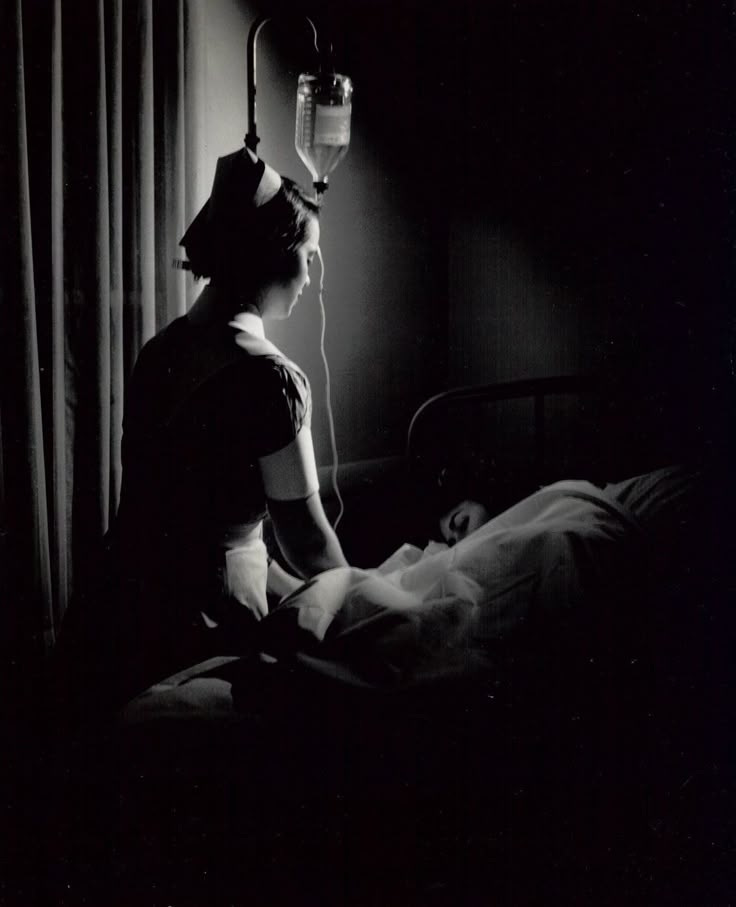
They told me I am too involved. Like it was something I had to work on. For me being involved is the standard.
It is a strange kind of accusation, the way certain truths are, because it reveals more about the world it comes from than about the person it is aimed at. As if there exists a correct distance from another human being at the edge of their life. As if care can be calibrated into something clean, something contained, something that does not spill.
I have been thinking about distance.
About how systems prefer it. How they build it quietly into the day: into the schedule, into the language, into the idea that professionalism is a form of restraint. Not cruelty, not neglect—nothing so obvious—but a steady narrowing of what is allowed to matter.
That shift did not allow for distance.
There was a woman who had been left too long, her body giving way in a different, slower humiliation, lying in her own urine. There was another room where death had already begun its quiet work. And somewhere in between, a catheter that needed to be placed, because even at the end, the body continues to demand these small, practical acts of dignity.
Time did not expand to meet any of it. It rarely does. Instead, it pressed inward, until everything existed at once, and every decision became a kind of leaving.
He was not peaceful.
We like to speak about dying as if it resolves into calm, as if the body knows how to slip out of itself with grace. But sometimes it resists. Sometimes it clings. His eyes were open, wide in a way that felt almost too awake for what was happening. He did not want to lie down. Or perhaps he did not want what lying down meant.
I sat beside him.
There is a moment, sometimes, when all the structured language falls away—no care plan, no protocol, no documentation field—and what remains is something older, something quieter, a kind of recognition that passes between bodies.
He took my hand.
Not dramatically. Not as a gesture. Simply as something to hold onto. The midazolam had already begun its work, moving through him with its own quiet insistence, but he resisted it, as if there were still a boundary he had not agreed to cross.
I told him, softly, that he could lie down now. That it was okay.
It was not a sentence that belongs anywhere official. It cannot be audited or evaluated. But it was, in that moment, the truest thing I could offer: not certainty, not reassurance, but permission.
He leaned his head against my shoulder.
There is a particular weight to that, the weight of someone who knows before you say it, before you name it, before anything is finished. I guided him back to the mattress. Pulled the covers over him. Stayed long enough for something in him to ease, or perhaps simply to stop fighting so visibly.
And then I left.
This is the part that does not translate well into the stories we tell about care. The leaving. The way you step out of one room where something irreversible is happening, and into another where something else is already unfolding. There is no clean ending, no moment of completion. Only a series of thresholds you cross without ceremony.
After my shift, I went back.
The building was quieter then, or perhaps I was. I stood beside him again, and I kissed his forehead. A small, human gesture, unrecorded, unnecessary in every formal sense, but necessary in another way that is harder to explain and harder to defend.
He died the next day.
There had been a second dose of midazolam. He did not know that I was there. The moment did not belong to him in any conscious way. It did not change the outcome. It did not alter the trajectory of anything measurable.
But it existed.
And that seems to matter, even if I cannot quite account for why.
I closed the door knowing there were things I had not been able to give him. Not because they were beyond me, but because they were beyond what the day allowed. There is a difference, and it is an important one.
Later, I lay in my own bed, carrying the residue of it—not just fatigue, though there was that too, but something heavier, less defined. The accumulation of all the moments that do not resolve, that do not settle neatly into meaning.
Too involved, they say.
But I am beginning to think that what they call involvement is simply attention. A willingness to remain present where it would be easier, and more efficient, to look away. To register that something is being lost—not in a dramatic collapse, but in small, continuous ways.
And perhaps that is what is uncomfortable.
Not the care itself, but the refusal to make it smaller than it is.